

How Ukrainian companies can implement ERP without wasting time and money
When planning for the next fiscal year, more and more companies budget for implementing an ERP system, digital data transformation, and automation of business processes in the company. However, many do not realize the multifactorial nature of such a project in terms of cost and time.
Everything depends on the current state of affairs and the willingness to optimize one’s processes so that the implemented international ERP system will deliver a tangible result from its implementation in the first months of active use.
Mistakes in project approach during more than 20 years of practice
One of the most common mistakes companies make when implementing an ERP system is to underestimate the project’s complexity. This may sound strange because ERP projects have long been exotic in the Ukrainian market. People in top management often have some personal experience with such projects or have heard that ERP is not easy. Nevertheless, during negotiations you often hear the statement: “We have almost standard processes” or “Why do we need so much time and money for this or that stage of the project?”

In other words, the customer almost always thinks that everything is fine, that everyone understands the processes, that everything is optimized, and that all that is missing is a modern ERP for data consolidation and reporting. In reality, the situation is somewhat different. First of all, there is no such thing as a “standard” process. For example, let’s take a seemingly simple procurement management unit. If you dig a little deeper, you will find that one company wants to have all prices and discounts from suppliers in the system, while another does not; when a supplier does not deliver goods, one company issues a credit note to return the funds, while the other has a procedure to generate additional revenue with a new delivery. There are many such small and large differences in all processes.
Everything is simple and standard
The trap of thinking “everything is simple and standard” is that the company sets itself and potential ERP system implementers up for an overly optimistic approach. In the long run, this will play a cruel joke – expectations collide with reality: the project requires more effort and investment.
In the company, we always emphasize that the level of competence and knowledge of ERP consultants is not limited to a thorough knowledge of the Business Central system we implement. It is important to have a deep knowledge of the professional part of business processes, literally, knowledge of tax accounting laws, knowledge of International Financial Reporting Standards, knowledge of how controlling and treasury processes work, how consolidated accounting is built in a holding company and intra-group turnover is separated, what approaches to cost allocation exist in practice, and much more. This allows us to maintain a dialogue with the client to understand their needs and provide relevant feedback on the current state of the processes that need to be adapted in the future ERP system.
Working with employees, how to avoid sabotage
Of course, not everyone likes change, but I can’t recall any outright sabotage. The best prerequisite for a successful project is a statement from the company’s top management about a common roadmap for employees. After all, everyone should understand where the company is going, why the changes are taking place, and that this will make them at least more expensive as specialists in the labor market since they will already be familiar with international accounting systems, modern methods of data management, and so on.
It also happens that the company representatives in charge of selecting a system and a contractor are hostage to budget constraints or, for example, victims of competitive wars, when one of the potential contractors promises to implement quickly and cheaply. And on this often empty promise, they win the contract.
And then the fun begins: the initial budget is exhausted, the project does not move forward, and painful negotiations with the ERP system implementer begin about what to do next: go to court, look for an additional budget, or change the contractor.
The contractor does not finish the project
Paradoxically, no matter how disgusted a defrauded customer may be in such a situation, the solution is often to look for additional funds and try to complete the project with the current contractor. This is exactly what those who promise quick and cheap solutions are counting on. After all, changing the implementation approach, fixing bugs, and updating business processes and technical documentation can be more time-consuming and costly with a new service provider.
Of course, this does not provide comfort and efficiency in project implementation. To avoid this situation, it is better to do everything right before the project starts.
A thorough study of the project scope and detailed work plan will help you get a sober assessment and a realistic budget. In our work we pay great attention to understanding the scope of the project – what processes should be supported by the system after implementation, what are the potential difficulties in these processes, and what are the risks, including organizational ones. If necessary, we offer to conduct a mini-discovery project to more realistically estimate the scope of work. When we create a future project plan, we break down the tasks in as much detail as the preliminary vision of the scope allows.
Also, as a crucial step in the decision-making process for an ERP project, I advise you not to neglect the opportunity to communicate with customers who already have implementation experience and can provide objective feedback on the system and the team, and even some advice on the course of the project.
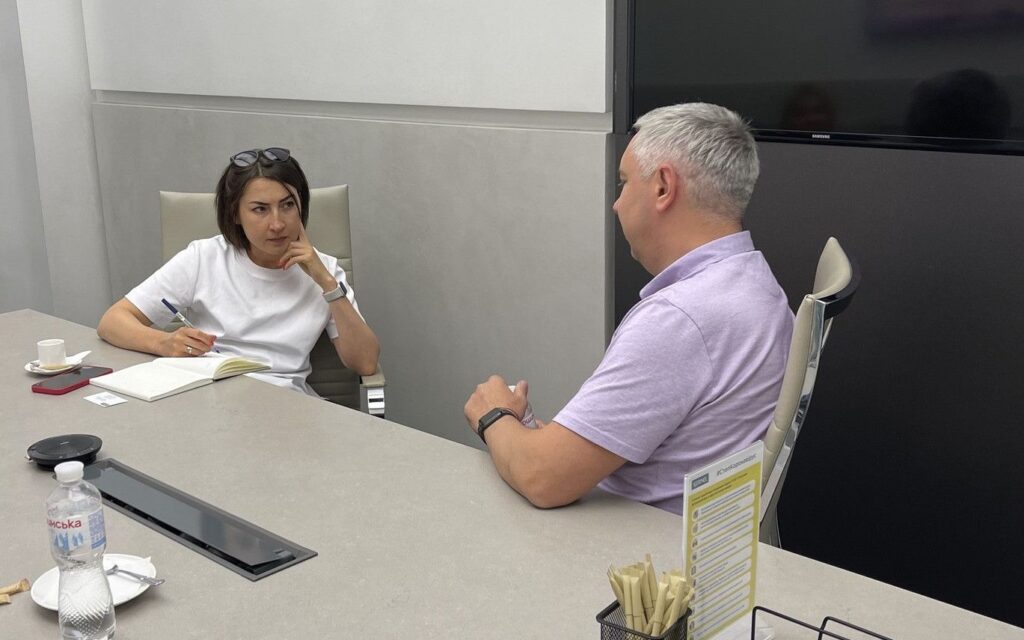
How to protect the customer from situations with unfinished projects and an exhausted budget
The apparent simplicity always breaks down against the reinforced concrete reality of a rigid set of project tasks, which may not be obvious if you plan superficially without decomposing project stages and sub-stages.
When the real picture becomes apparent, my advice to you is that if you realize that you don’t have the resources (human and financial) for the project, it’s better not to start it. The best solution in this case is to take the time to prepare, even if it takes another year or two.
On the other hand, resources will always be limited, but they can be found if the project has a high priority, especially among the owners or senior management. The project budget can be managed using the project scope – in the case of an ERP system, the list of processes and the level of their implementation in the ERP system. You can always reduce your desire to automate everything and focus on individual processes for the first stage. It all depends on the priorities and scope of the project.
The optimal solution
There is such a thing as a “golden mean” when certain indicators balance and create an ideal relationship. And there is such an indicator as “cost of ownership”, which gives an understanding of how much money is spent on implementing and supporting an ERP system.
For more than 20 years in the ERP market, I have seen the incredible story of Business Central (until 2018 known as Dynamics NAV), which has become the most popular ERP system in the world by the number of licenses implemented, precisely because it has a “golden mean” – the best cost of available functionality, taking into account scalability. Companies choose Business Central because it offers the best total cost of ownership.
They can start using an ERP system’s key features for as little as $70 per user per month. And for the next year, Ukrainian companies get all the system’s features: from a powerful financial management cycle to sophisticated production management, with an 80% discount from the Microsoft vendor! I strongly advise you to take advantage of it.